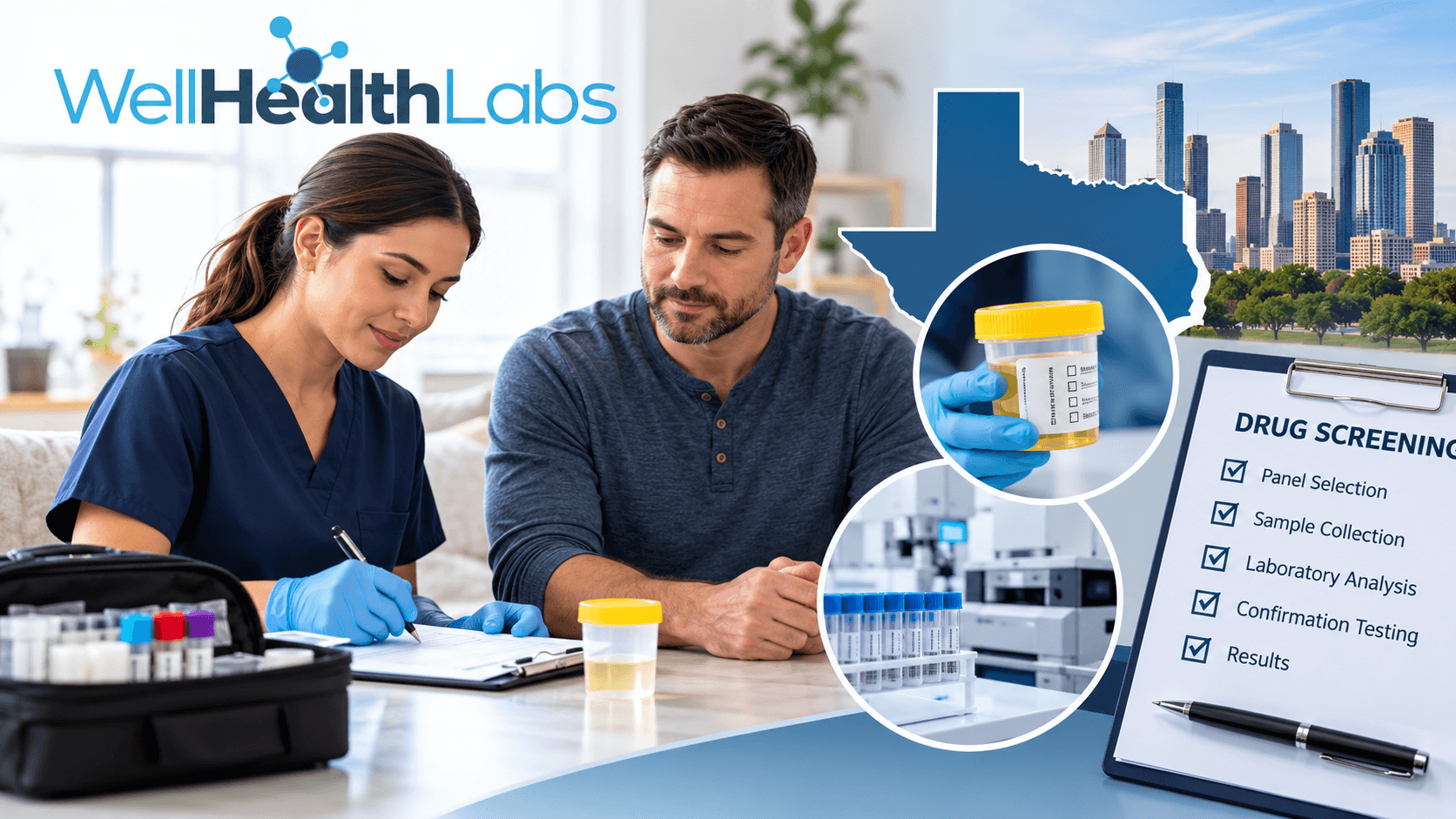
Drug screening is used in employment, workplace compliance, treatment and monitoring programmes, and other situations where a defined set of substances needs to be checked. A drug screening test in Texas usually begins with specimen collection and an initial screen.
Depending on the panel and result, a presumptive positive may then require a more specific confirmation method before it is treated as a confirmed laboratory finding. Understanding that sequence helps individuals and organisations choose the right test and interpret the process more accurately. Let’s unpack drug screening together.
What Is a Drug Screening Test?
A drug screen checks a specimen for the substances or drug classes included in the selected panel. The panel is important because not every test looks for the same targets. Some screens are built around commonly tested substances, while broader panels include additional prescription drugs, synthetic opioids or other classes.
Screening and confirmation are different stages. A screening test is intended to identify a possible positive result. Definitive confirmation uses more specific laboratory analysis to verify the finding when confirmation is required.
How Does Drug Screening Work in Texas?
1. Choose the Appropriate Panel
Start with the reason for testing. An employer, treatment programme, monitoring plan or compliance requirement may specify a particular panel. Well Health Labs currently offers urine-based options including a 13-panel presumptive screen and a broader 23-class screen with definitive confirmation available for positive findings.
Review the included substances before booking. A larger panel is not automatically better if it does not match the testing requirement.
2. Provide a Specimen
Urine is a common specimen for drug screening and is the specimen type used for the current Well Health Labs drug-screening options. Collection procedures help protect specimen identity and handling. The exact process may differ according to the reason for testing and the collection setting.
3. Laboratory Screening
The laboratory analyses the specimen for the targeted substances or metabolites. A negative screen generally means the test did not detect the targeted substance above the applicable threshold. A presumptive positive means the screen has identified a result that may require further analysis.
4. Confirmation Testing
When a positive screen requires confirmation, methods such as GC-MS or LC-MS can provide more specific identification. These techniques are used because they can distinguish and verify compounds with greater analytical specificity than an initial screening method.
This step is especially important in settings where the result may affect employment, treatment or another formal decision. The initial screen and the confirmed result should not be treated as interchangeable.
5. Receive the Results
Results are reported after the required laboratory steps are complete. Turnaround depends on the panel, specimen and whether confirmation testing is needed. Well Health Labs delivers results through a secure digital reporting process.
What Do Drug Testing Panels Check For?
Different panels cover different drug classes. Well Health Labs' 13-panel screen includes commonly tested opioids, stimulants, cannabinoids, sedatives, PCP and alcohol. The broader 23-class option adds categories such as fentanyl, synthetic opioids, gabapentin, pregabalin, muscle relaxants, ketamine and alcohol biomarkers.
The correct panel depends on the testing purpose. If the test is required by an employer, court, treatment programme or another organisation, confirm the required panel before purchasing a different one.
How Long Does a Drug Screening Test Take?
Specimen collection itself is usually brief. Laboratory processing time varies. A straightforward screen may be completed sooner than a case requiring definitive confirmation because confirmation adds another analytical stage. Do not assume that every drug-testing result has the same turnaround.
What Happens After a Positive Screen?
A presumptive positive is not always the final result. Where confirmation is part of the service, the specimen undergoes more specific analysis before the finding is reported as confirmed. This distinction is one reason to choose a service that clearly explains whether confirmation is included or available.
Walk-In and Mobile Drug Screening Options
Well Health Labs offers mobile collection in Houston, Dallas-Fort Worth and San Antonio, with walk-in collection available in the Houston and Dallas-Fort Worth areas for supported services. Mobile collection can be useful for businesses, facilities and individuals who need testing without a separate trip to a laboratory.
What Should You Check Before Booking?
Confirm the panel, specimen type, collection method, price, whether confirmation is included, and the expected reporting process. If the test must satisfy a formal requirement, verify those requirements first. A professional drug lab test service in Texas should make these details easy to understand before payment.
Why the Testing Purpose Should Be Clear First
Drug testing is not one universal service. A pre-employment requirement, treatment programme and personal test may each call for different documentation, panel coverage or collection procedures. Before booking, confirm what the requesting organisation actually requires. That prevents paying for a broader panel that is unnecessary or completing a screen that does not satisfy the intended requirement.
Schedule Drug Screening With Well Health Labs
At Well Health Labs, we provide self-pay drug-screening options with clear panel information, upfront pricing, secure digital reporting and mobile or walk-in collection where available. Choose the panel that matches your need and review the collection details before booking.
If you need confidential drug screening in Texas, schedule through us at Well Health Labs and select the supported collection option that works for your location and testing requirement.